
 Online Services
A Tradition Spanning Over 480 Years: Manisa Mesir Paste Festival
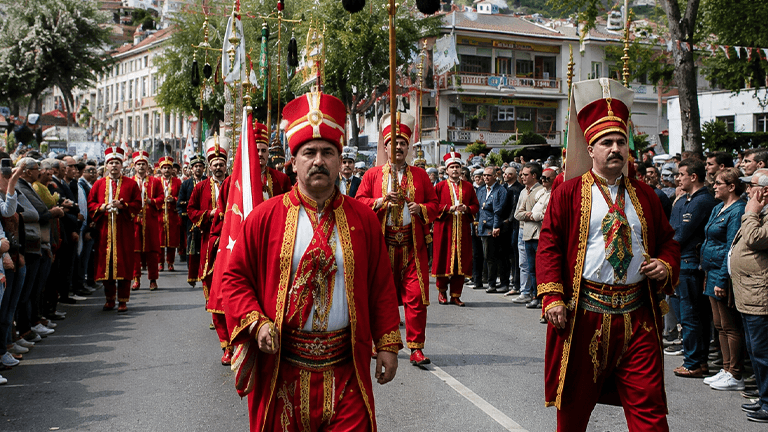
The Manisa Mesir Paste Festival is a tradition spanning more than 480 years and holds great historical significance. Throughout the festival, various events are organized, including parades, concerts, theater performances, folk dances, and competitions. At the closing ceremony, tons of mesir paste made with 41 different spices are distributed to the public.
On the UNESCO List
The Manisa Mesir Paste Festival is included in UNESCO’s Intangible Cultural Heritage List. The festival symbolizes peace and social unity, with hospitality at its heart. Visitors have the opportunity to discover not only Manisa’s natural and historical attractions but also its traditional culture.
How Did Mesir Paste Originate?
Mesir paste was first prepared by Merkez Efendi, a physician of the time, after Ayşe Hafsa Sultan, the mother of Yavuz Sultan Selim, the ninth Ottoman sultan, fell ill. Over time, mesir paste became widely known. Made entirely from natural ingredients, the paste has traditionally been regarded as beneficial for strengthening the immune system and stimulating appetite.
Used Against Illnesses
Containing a blend of numerous spices, the mixture was used throughout history for various ailments. In later years, the Manisa Mesir Paste Festival was established, during which the paste was distributed to the public free of charge.
A Blend of Fresh Spices
The recipe for mesir paste has been passed down from generation to generation through the master-apprentice tradition and continues to be prepared using traditional methods. Its ingredients include spices and plants such as orange peel, mustard seeds, saffron, anise, black pepper, vanilla, coconut, fennel, ginger, black cumin, and allspice. All ingredients are combined carefully, taking their proportions and cooking times into consideration.
Sultan Mosque and Complex
The Manisa Mesir Paste Festival traditionally begins each year at the Sultan Mosque and Complex before spreading throughout the city and its surrounding districts.
Shared with the Public
The festival features theater performances and historical reenactments. Visitors are introduced to the region’s cultural heritage, while mesir paste is distributed to the public amid festive celebrations around the Sultan Mosque.
Academic Activities
During the festival, which lasts several days, Manisa Celal Bayar University hosts academic activities for local and international guests. Numerous research projects, symposiums, and panels are organized, covering topics such as the significance of mesir paste, field studies, and the region’s socio-cultural heritage and architecture.
Was this content helpful?