
 Online Services
Manisa Travel Guide: The City of Ottoman Crown Princes
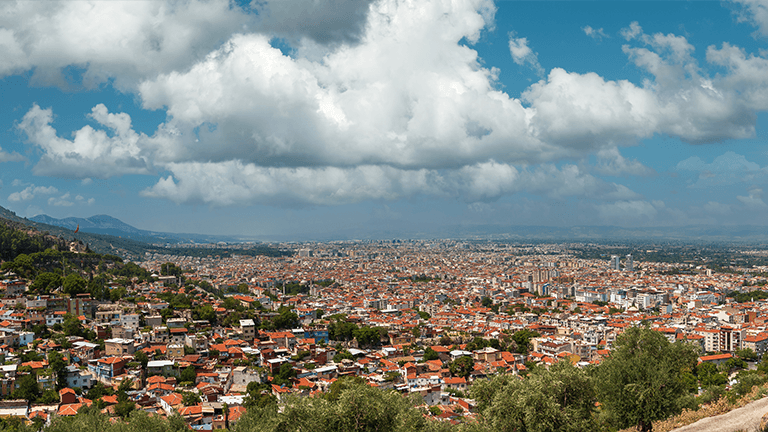
Manisa, the second-largest city in the Aegean Region, is also known as the City of Princes. Every corner of the city is steeped in cultural heritage. During the Ottoman Empire, princes were educated in Manisa, the sanjak closest to the imperial capital, before ascending to the throne. With its undeniable historical significance, the city covers an area of 13,339 square kilometers and has a population of 1,456,626. The Manisa travel guide explores the city’s 17 districts, covering its natural beauty, culture, famous mesir paste, and legendary “Tarzan,” while also delving into the many civilizations that have called Manisa home throughout history, including the Hittites, Persians, Byzantines, and Saruhanoğulları. Traces of these civilizations can still be found throughout the city during a trip to Manisa.
Manisa: The Road of Kings
Manisa was also home to the Lydians, who were the first civilization known to have used coins, and many kings once lived here. Every civilization that ruled the region left behind tangible traces of its presence, from archaeological sites to ancient cities. Manisa came under Roman rule in the 2nd century BC. Following the division of the Roman Empire in 395 AD, the city became part of the Byzantine Empire. During the era of the Anatolian beyliks, Manisa came under the rule of the Saruhanoğulları Beylik. In 1390, following the campaigns of Bayezid I, it became part of the Ottoman Empire. All these transitions and periods of rule have left their mark on every corner of the city, and the Manisa travel guide explores this rich cultural heritage in detail.
It is also worth noting that March is an especially popular time to visit Manisa, as this is when the famous Mesir Paste Festival takes place. Held for approximately 400 years, the festival is an essential part of the Manisa travel experience for both domestic and international visitors.
Where Is Manisa?
Located at the foot of Mount Spil and along the Gediz River, Manisa is a city of great historical importance. Its neighboring provinces include Balıkesir, İzmir, Uşak, Aydın, and Kütahya. Thanks to its convenient transportation links, Manisa has become a major production hub for numerous global companies operating in its organized industrial zones. The city continues to develop and industrialize with new investments.
Another advantage of Manisa is its proximity to both the Aegean Sea and Central Anatolia. This strategic location attracts people from different regions and contributes to the city’s growing population.
Places to Visit in Manisa
Manisa has 17 districts: Ahmetli, Akhisar, Alaşehir, Demirci, Gölmarmara, Gördes, Kırkağaç, Köprübaşı, Kula, Salihli, Sarıgöl, Saruhanlı, Selendi, Soma, Şehzadeler, Turgutlu, and Yunusemre. Each district has its own distinctive culinary specialties as well as natural and historical attractions. Among the many places to visit in Manisa are the Ancient City of Sardis, Muradiye Mosque, Spil Mountain National Park, the Ancient City of Thyateira, Kula Monument, Manisa Archaeological Museum, and Cybele Rock Monument. Some of the highlights include:
Sardis Ancient City: Located in Salihli, this ancient city served as the capital of Lydia and is also known as the place where coins were first minted. The starting point of the Royal Road, the remains of one of the earliest known theaters in history, the tombs of the Lydian royal family, its historic library, and the Temple of Artemis make Sardis one of the essential stops on the Manisa travel guide.
Spil Mountain National Park: Offering panoramic views of Manisa, the park was declared a national park in 1969. It is a popular destination for mountaineering and features numerous natural and historical attractions. The site is home to the relief of Cybele, the goddess of fertility, as well as the remains of Magnesia and Tantalus fortresses. Its most famous natural treasure, however, is the Manisa tulip.
Kula Fairy Chimneys: Located in the Gediz Valley, these fairy chimneys were formed through the erosion caused by floodwaters flowing down the valley slopes and by wind. The result is a striking natural landscape featuring soft pastel tones. Kula Fairy Chimneys have become one of the region’s most popular attractions in recent years. The Kula Volcanic Geopark, Türkiye’s first and only geopark, is also located nearby.
Muradiye Mosque: Another important landmark to visit in Manisa, Muradiye Mosque was built between 1583 and 1592 in the name of Sultan Murad III, the 12th Ottoman sultan. The complex consists of a mosque, madrasa, soup kitchen, and külliye. The mihrab wall is decorated with İznik tiles. The project was designed by Mimar Sinan, while its construction was carried out by architects Mahmud Ağa and Mehmed Ağa. Muradiye Mosque is considered one of the finest examples of Ottoman architecture.
Thyateira Ancient City: An important destination for any trip to Manisa, this ancient city lies beneath the modern-day district of Akhisar and has witnessed numerous battles throughout its history. It held a particularly important position during the Early Christian period. One of the seven churches mentioned in the Book of Revelation is associated with Thyateira. The archaeological remains are concentrated in two areas known as Tepe Mezarlığı and Hastane Höyüğü. The earliest inscriptions discovered in the region date back to the 3rd century BC.
Mesir Paste Festival: Mesir paste was originally prepared using 41 different spices and herbs for Hafsa Sultan, the mother of Süleyman the Magnificent, the 10th Ottoman sultan, to help with her illness. Over time, the paste became widely loved and has continued to be consumed not only for its traditional associations with health but also for its distinctive flavor. Held in March, the festival features the distribution of three tons of free mesir paste to the public, along with a wide range of events, including parades, theater performances, public concerts, and cooking competitions.
Was this content helpful?